









This conversation is part of the BaccRag’s Alumni Project, an initiative to help BSGE students learn about life after high school by reaching out to our school’s alumni and talking to them about their experiences during and after their time at BSGE. This interview has been edited for length and clarity.
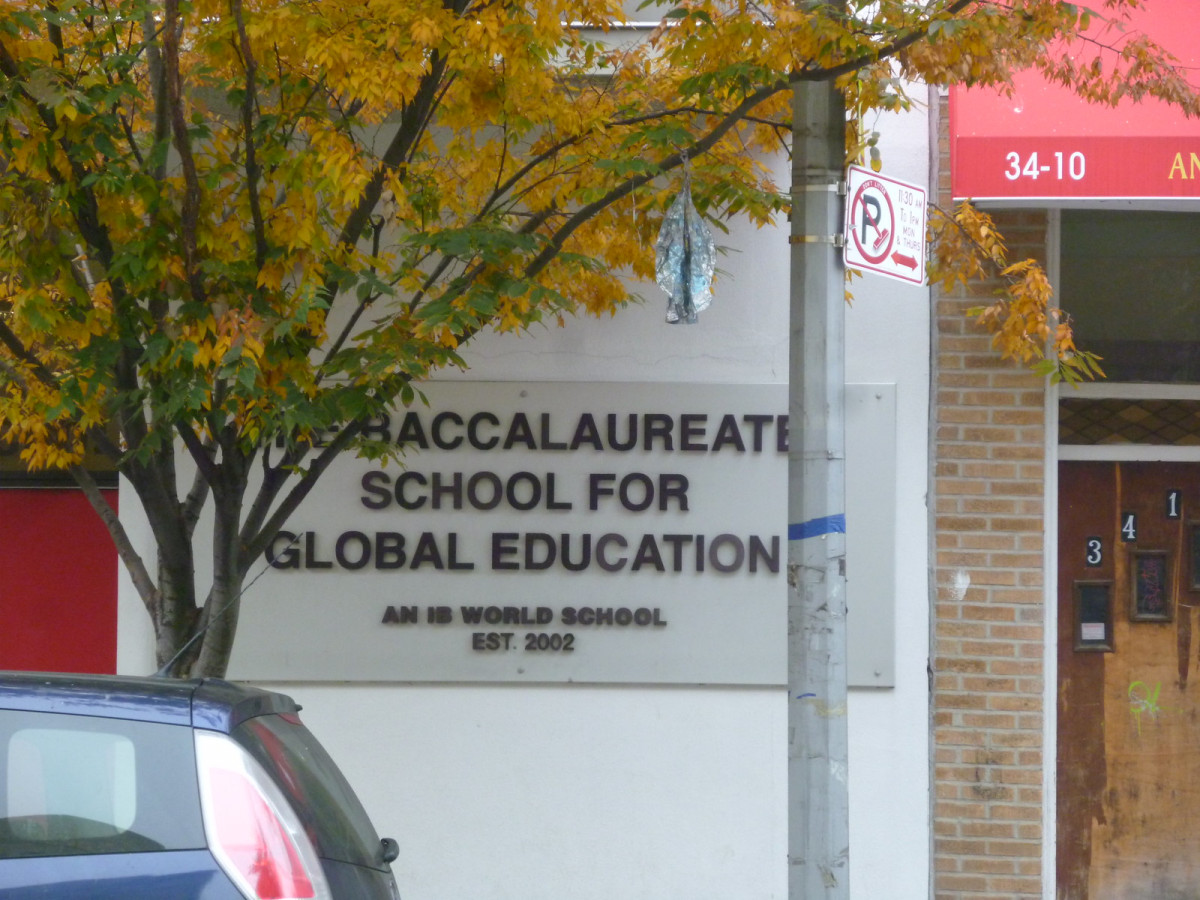
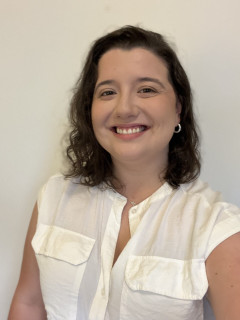
This is a conversation between the BaccRag and Meghan McCullough, who graciously accepted the BaccRag’s interview request. Meghan graduated BSGE in 2011 and earned her Bachelor’s in English Literature from Amherst College before pursuing an MFA at the New School. She has worked both as a freelance editor and at publishers including Penguin Random House, Harper Collins, Levine Querido, Scholastic, and now Bloomsbury. Over the course of this interview, Meghan gives advice to current BSGE students and discusses her time at BSGE (including as the BaccRag’s editor), her experiences at Amherst, and her career.
I think I’ll just start with your experience at BSGE and then go chronologically from there. What was your BSGE experience like?
Meghan McCullough: It was great. I loved it. It was really challenging, but in a good way. And I started at BSGE in 7th grade, so I did what was then called the middle years program…I just kind of knew I didn’t want to leave. I took a couple tests for other specialized high schools, but my heart really wasn’t in it and I kind of hoped that I wouldn’t get into those other schools because I just wanted to stay where I was and I was really happy to stay. I loved how tiny it was, and how you knew everyone basically, and how it kind of just felt like a family, even with the teachers, we were just this tight-knit group and I remember it so fondly. I really loved my time at BSGE.
In terms of the thing you liked most about BSGE or what you felt was most unique about your high school experience, would that be just the smallness of the school or were there other things as well?
Meghan McCullough: Yeah, I guess probably the size and the camaraderie there between the students and the teachers. I think also it’s not even just the fact that the school is small. It meant that you always had attention. You always had time to get personalized attention from the teachers without feeling like you were taking from other people. There was time for everybody and there was this sort of comfort in that. My sister went to Hunter High School and the vibes there sounded really intense and competitive and kind of cutthroat. [BSGE had] the absence of that kind of energy of being competitive about grades or something, it was like we were all trying to get good grades together and helping each other out in that way.
You were in the BaccRag; were you one of the founders? Was your experience at the newspaper kind of why you decided to go into editing?
Meghan McCullough: Okay, my memory is really hazy. No, I was not one of the founders because Jolijt founded it as the Popcorn Weekly and I don’t think I joined until a little bit later. I think I joined when it was still Popcorn Weekly, and then we turned it into the BaccRag and I think I was there for that. But I think Jolijt founded it with maybe Kristen Spang? I can’t remember. But I was there in the early days for sure…Honestly, I think maybe the BaccRag is the first place where I learned how much I liked editing because I would get assigned to write articles. But what I remember more than writing articles was editing other people’s articles, and I would often just get assigned to edit articles and help with the layouts and placing the articles and helping with making their titles and things like that. And I realized, it just sounds random to have so much fun doing something like that, but I really, really liked it even more than writing the articles myself, and I actually really dreaded when I would have to write an article. So yeah, I think it originated there and I had fun giving feedback and noticing the articles improve.
Were you on other teams or clubs?
Meghan McCullough: I was…not athletically inclined, so I wasn’t on any teams and I think BaccRag might be the only extracurricular that I did. I really kept to myself. I was really shy when I was at BSGE. It was helpful to be on BaccRag because Jolijt was one of my closest friends and she kind of bullied me into joining, but I’m really glad that she did because I probably would have been too shy to join if she didn’t insist. Yikes. Yeah. I really didn’t do many extracurriculars…it was just that, I think. Unless, I mean, maybe I’ll ask her later and she’ll remind me about something else she forced me to do. But it was usually that kind of thing, getting dragged into helping out with something because your friend was doing it and being positively peer pressured was kind of my jam at BSGE.
The last question I want to ask you about BSGE is that there are a few teachers, not too many, who were at BSGE when you were there and are either still there or just left. So that’s Mr. Wolov, Shantanu, Ms. Kumar, and then Peter Wilson just left.
Yeah, yeah, yeah, of course, all of them.
I asked another alumna about those teachers, I think you know her.
Yeah, we’re really close friends.
She was like, ‘yeah, I have no idea. This was 20 years ago. I have no memories.’ I wanted to see if you have any more recollections of those teachers.
Meghan McCullough: I have good memories of all of them and Mr. Wolov is top of mind right now because I just saw him for the first time in probably decades when Amalia and Jolijt and Kristen Spang and I volunteered to help with the testing at the school, which was really fun. I remember he taught us history. I remember he used to use really interesting texts for history. It was almost like cartoons. Do you still have that?
I think he only teaches seventh and ninth grade. So I don’t remember much; I feel like when we were doing it, there was a bigger emphasis on the textbook, though. So maybe things have changed.
Meghan McCullough: Okay, okay. I don’t know why they stuck out in my mind and he would have lots of like visual aids and I remember him teaching us about the hierarchy of needs, I think, for some reason. I don’t know. I remember his visual stuff.
Wolov taught about the hierarchy of needs when I had him. So that has stayed constant.
Meghan McCullough: Oh my god. Okay, yay. I have a better memory than Amalia. Okay, so… I don’t know, because I remember that was a visual thing that he drew out that really stuck with me in his class because I also have a pretty rough memory, but I think I must have been a visual learner because some of his stuff stuck with me the most just because of the way that he taught it. But yeah, all of them, I feel like I have fond memories of, like Peter Wilson was our college counselor. And I think he made me do 13 drafts of my personal essay to get into college, which was absolutely brutal, but also by the end, it was incredible, thanks to him. And I got into a bunch of colleges, so that’s great. I guess it succeeded. But yeah, it’s so cool that so many of the teachers that we knew forever ago are still there or were still there recently.
So you went to Amherst, right, for college? How was that for you? Did you like it there?
Meghan McCullough: I liked it. I didn’t like it as much as BSGE, which is maybe kind of nutty, but I think when I left BSGE, I thought, well, ‘I liked how small BSGE was, I want to go to a small liberal arts college because it feels that’s someplace I would naturally thrive’. But I never really thought about the fact that BSGE was someplace small in an enormous city that I loved, whereas Amherst College, it’s small, kind of in the middle of nowhere if you don’t know how to drive, which I didn’t…and so I was kind of stranded. And that isolation was not my favorite, but in terms of the education, I felt like the education that I received at BSGE fed directly into the education I received at Amherst. I felt like I already knew how to function in a college classroom, how to annotate texts, how to participate in a class, and how to write an essay, you know, that all was very natural. So it was more going from the city to the relative country. It’s not the country, but…it’s not a city. That was a sort of a culture shock moment for me. But in terms of education, I felt like I had been served so well by BSGE.
You’ve worked as an editor at a lot of different places, including Scholastic, Levine Querido, Random House, Harper Collins, in freelance, and now at Bloomsbury. What do you think are the big differences working freelance compared to at a publishing house, and what are the major differences between those publishing houses?
Meghan McCullough: Oh my gosh. Yeah. So all the publishing houses I’ve worked at have very distinct personalities, but they sort of have a baseline structural similarity in that as an editor at a publishing house, you’re not just editing. You’re doing a bunch of other things in addition to the editorial work. You’re acquiring the books, which means that you’re networking with literary agents and evaluating submissions and trying to acquire the ones that feel like the best fit for not only you, but also for the publishing house where you are and the list of books that you’re working on. And so it’s like switching from one mind, like the mindset at Levine Querido to what that looks like at Harper Collins to what that looks like at Bloomsbury. It’s all similar [but] coming at it from different angles. But when you’re a freelance editor, all of that extra stuff is kind of stripped away and you’re just doing the editing. That was actually really fun to do for a little while. I freelance edited for a couple of years and it sort of took away the voices of, ‘I’m editing this so that it will be published’. And instead, I’m editing this so that it can be just a better version of itself, whatever that means to this author. And I felt like it helped me get sort of back to basics when it came to editing and to become even more confident in myself as an editor because I was just doing it for myself and for the author I was working with rather than within this much larger ecosystem at a publisher, when you’re thinking about not only your thoughts on the story and what the author wants, but also how we’re gonna come at this from a marketing and publicity and sales standpoint and what readers are going to want this and stuff like that. It’s been interesting over the years in my career to notice these different entry points into editing and how it can affect the editing itself, if that makes sense. I feel like I’ve done it in a bunch of different ways and I’m really happy to be at Bloomsbury now. I love, love, love it here and it is the perfect size. It’s not too big, not too small, like BSGE.
Can I ask why you did end up transitioning away from freelance, considering how much you enjoyed it?
Meghan McCullough: Really, it was just financial needs, you know? I really enjoyed freelancing, but I freelanced sort of as a problem-solving tactic to when I was laid off from Harper Collins. And at first, I thought, ‘you know, I’m just freelancing for the time being. Really what I’m doing is I’m on the job hunt and I’m freelancing on the side.’ And then the job hunt took so long that it ended up that I was freelancing and I was job hunting on the side sometimes if I had heard of a position that opened that felt like the perfect fit. So I started being very selective with what I applied to when I was in my second year of freelancing and realizing that I was actually enjoying myself. But it was a strain, you know, living in New York City, supporting yourself completely independently just on a freelance salary. It was a little stressful, even though I was enjoying the work. And so when I saw this position at Bloomsbury go up for YA and middle grade specifically, which is my biggest passion, and I had already really admired the books that Bloomsbury did, I thought, ‘okay, you know what? I’m gonna try for this one because this sounds kind of perfect.’ And it was. Knock on wood, but I’m almost a year into my time at Bloomsbury and I just love it and I’m getting to work on the kinds of books that I absolutely love with people who I really, really like. And now I have healthcare, so that’s great.
What authors or what books did you most enjoy working on? This could be at Bloomsbury or when you were freelancing or at any point in your editing career.
Meghan McCullough: Ah, oh my god. That’s kind of a scary question because I’m not really supposed to play favorites. So maybe I’ll answer it kind of generally if that’s okay. My favorite kind of author to work with is someone who is down to brainstorm with you, who isn’t too precious about their writing and is excited to chat and to engage with a critique and to sort of bounce ideas back and forth. When you’re when you’re editing a book, you’ll read through it and you’ll send the author an editorial letter, which is kind of a several pages long rundown of all the sort of big picture things that you think the author should be addressing when they revise and maybe you throw in suggestions of how they should address those things and it’s largely based off of your impressions when you were reading it. ‘You know, I felt like this characterization could be stronger’ or ‘the world building wasn’t really coming through’. But I don’t really consider that letter to be the end of the conversation. It’s really the beginning. And what I want is for us to then get on a call and talk about what the author is really gonna do now. I don’t want them to just take the letter and follow it beat by beat. I want them to tell me what they think from the letter will work best and why and what ideas it maybe brought up for them that might be even better than what I suggested in the letter because they know their world best, certainly better than I do, you know? And then we can kind of figure it out together and then they can go from there. And that’s always so fun for me when I feel like an author has really invited me into the world. They’re creating and we’ll kind of throw ideas at the wall and we can do things back and forth and suddenly by the end of an hour-long call, we’re unlocking the key to everything and it’s just the most fun. But, you know, I also get that sometimes, you know that quote ‘kill your darlings?’ It could be hard to kill your darlings and I get that too. Each editorial process with each author is going to look a little bit different. They’re not always gonna be exactly the same. But yeah, my favorite part about it is that generative thing when you can really get a conversation going and kind of break the whole thing open together.
When you say publishing houses have distinct personalities, what does that look like?
Meghan McCullough: A good example of this is Levine Querido, which was a very small, independently run children’s publisher that I worked at for a few years and that’s where I really learned, I think, to be an editor. That publisher had a very distinct personality and perspective because it was completely dedicated to publishing stories from underrepresented creators. So that could be not only BIPOC authors, but authors with disabilities, just perspectives that aren’t necessarily always the most broadly touched on or available. And it was all about uplifting those voices. And that was a really exciting place to work as an editor from because it just made you so thoughtful about the kind of stories you’ve always consumed over the course of your life and and thinking about why that is and why certain stories are more widely available and told than others and and realizing that you get to have a role in helping to shift that. It was sort of like genuinely living a dream working there. At huge publishers, like Harper Collins there isn’t, on the large scale, that sort of very specific angle, but each publisher will have imprints which are these smaller publishing groups within the larger umbrella of a publisher. So — I’m kind of just looking at books on my shelf right now — for example an imprint of Penguin Random House is Dutton Young Readers. That’s the imprint that publishes John Green. Or in Harper Collins, there was a young reader imprint called Heartdrum, and they focused on Indigenous creators. I mean, if you ever get a chance where you’re interested in this kind of thing, just kind of looking through imprints at different publishers and noticing what exactly they publish and why and sort of what their ethos is really fun and interesting to me. And it’s been really educational over the course of my career to try out these different areas of publishing and figure out what mine is, like, ‘what’s my perspective and what kind of books do I want to bring in? And what does that mean about where I should be as an editor and thinking about that as I grow?’
What advice would you give to a BSGE student? It can be about college, life, career, high school, whatever you want.
Meghan McCullough: Oh my gosh, okay. Let me see. Something that [Peter Wilson] always told us to do when he was our college counselor, he would say when you get to college, make sure that you study abroad. Don’t pass that up. And I think everybody should listen to that. I was foolish and I didn’t take that advice and I didn’t study abroad and I’ve regretted it for my entire life since. All of my classmates, like BSGE classmates who I stayed close with, did study abroad and they made incredible friends or even found the loves of their lives while they were studying abroad. And I just didn’t participate in this. Again, you know, normally to do any extracurricular, I need to be dragged into it. And so even in college, that was the case and that’s a huge regret for me. So I would say while you’re planning your college applications, take a look at what study abroad offerings there are. Decide now that you’re gonna do it, even if it sounds kind of scary. So that’s one thing that just randomly came up just because we thought of Peter, but that was an important piece of advice from him. One other piece of advice…and it’s also like a little self-serving because I am in book publishing, but I just would say at BSGE, you know, I feel like that’s where I learned how to really read in a very high-level, critical way. And I would just urge everyone to not let go of that. Just keep reading for your whole life, you know? I hate that it’s becoming something that people don’t do as much. I’m almost 33 right now, and the amount of friends that I have who are my age who will say, ‘oh, I haven’t read all year’ or ‘I don’t read’, it breaks my heart. It makes me sick. And I just think, you know, at BSGE, hopefully you’re learning how fun and world-opening reading can be. I know I did when I was there and don’t let go of that. And remember that reading can still really serve you outside of the classroom and beyond and there’s more than one way to be a reader. You don’t just have to be reading a specific thing. Explore, find what you love to read and just get really into that, you know, maybe it’s manga. Who cares? But as long as you’re reading something, I think it’s important. So that’s my piece of preachy advice.
We would like to thank Meghan McCullough so much for taking the time to speak with us. If you are a BSGE alumnus or you know a BSGE graduate and you would be interested in participating in this interview project, please contact the BaccRag at [email protected].